
Washing Machine Smells Bad? Try These 4 Fixes
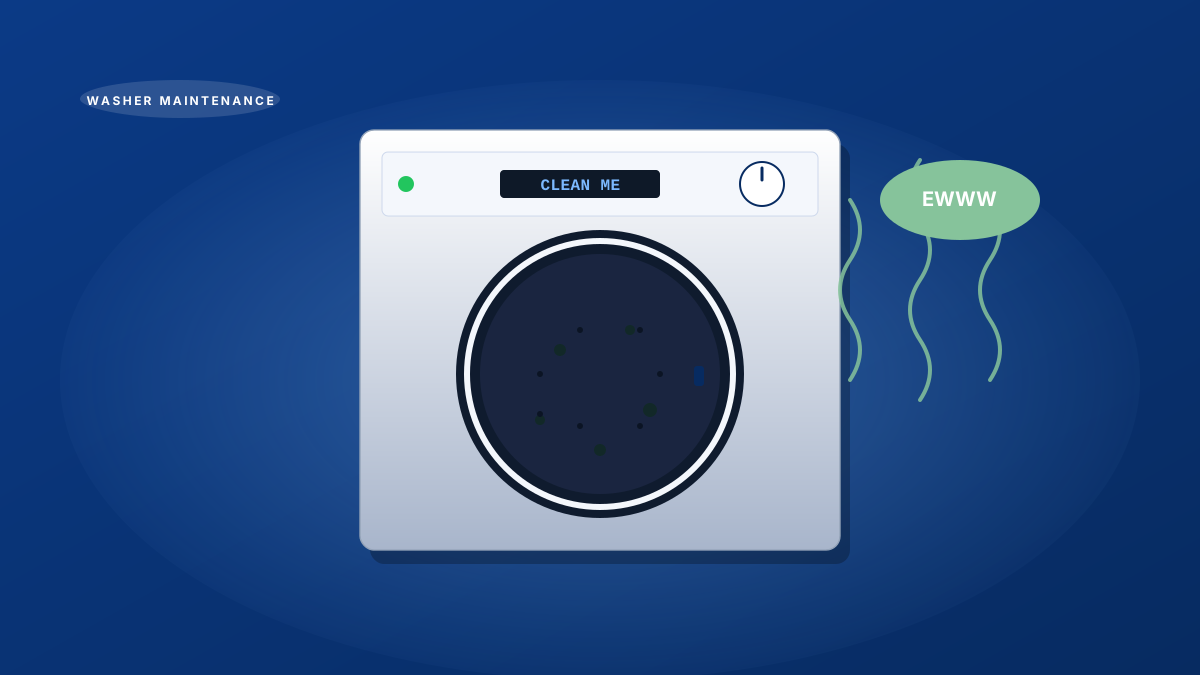
That moment when you open the washing machine and a damp, musty smell hits you in the face – it’s one of the most common complaints we hear from UAE homeowners, especially in apartments along the coast where humidity sits in the 70–90% range for half the year.
The good news is that 90% of washing machine smells have nothing to do with the machine breaking. They’re a build-up problem. Fix the cause, run a couple of maintenance cycles, and the smell is gone for good.
Here are the four causes our team identifies on almost every “smelly washing machine” callout in the UAE.
1. Mold and biofilm in the rubber door gasket
Front-load washing machines have a thick rubber boot around the door – that seal that flexes when the door closes. Water always pools in the bottom curve of that boot at the end of every wash. In UAE humidity, it never fully dries between loads. Result: black mold, pink biofilm, and the distinctive damp-towel smell.
What it looks like:
- Black or grey spots inside the folds of the rubber
- A pink or slimy film along the bottom curve
- Visible water trapped under the seal even hours after the wash finishes
How to clean it:
- Make a 50/50 solution of warm water and white vinegar
- Pull the rubber gasket gently outwards to expose the inside folds
- Wipe every fold with a microfiber cloth soaked in the solution
- For stubborn mold, use a soft toothbrush with bicarbonate of soda
- Dry the gasket with a clean towel
Five-second habit, 90% of the problem solved. After every wash, leave the door open for an hour and wipe the gasket dry with a microfiber. That single habit prevents most mold problems in UAE apartments.
If the mold has stained the rubber permanently, the gasket is a low-cost replacement part – usually AED 150–300 for parts plus an hour of labour.
2. Detergent and softener residue build-up
UAE water has a higher mineral content than most European water supplies. Combine that with the temptation to use extra detergent in hot weather, and washing machines here build up scale and detergent residue faster than in cooler climates.
The residue sits in:
- The detergent drawer (especially the softener compartment)
- The drum itself, in a thin film
- The drain pump filter
- The drain hose
Bacteria feed on the residue, and you get the sour, slightly sweet smell that’s hard to place but unmistakable.
The fix is a maintenance cycle once a month:
- Empty the drum
- Add 250ml white vinegar to the detergent drawer
- Add 100g bicarbonate of soda directly into the drum
- Run the longest, hottest cycle (90°C if available, otherwise 60°C)
- Once finished, wipe the drum dry and leave the door open
Many modern washers – Bosch, LG, Samsung – have a dedicated “Drum Clean” or “Tub Clean” cycle. Use it instead of vinegar if your machine has it.
For the detergent drawer:
- Pull it out completely (usually there’s a small release button)
- Soak in hot water with washing-up liquid for 20 minutes
- Scrub the back of the drawer and the cavity it slides into with an old toothbrush
- Dry thoroughly before sliding back
Use less detergent, not more. UAE water needs about 30% less detergent than the bottle suggests because the water is harder to dissolve in. Less detergent = less residue = less smell.
3. Clogged drain pump filter or drain hose
Every front-load and most top-load washing machines have a drain pump filter – a small access panel usually at the bottom-front, behind a flap. It catches coins, hair clips, lost socks, lint and pet hair before they reach the pump motor.
In UAE homes with long-haired residents (people or pets), this filter clogs in 3–6 months. The water sits stagnant against the clog, breeds bacteria, and the smell rises into the drum on the next wash.
How to clean it:
- Place a flat towel and a shallow tray under the access panel
- Open the panel – there’ll be a small drain hose or just the filter cap
- Pre-drain any standing water through the small hose if your model has one (it can be a litre or more)
- Unscrew the filter cap slowly (counter-clockwise)
- Pull the filter out and clean off debris under a running tap
- Wipe inside the housing with a damp cloth
- Screw the filter back in firmly (but not over-tight)
Do this every 6 months in the UAE. If you’ve never done it, you’ll be surprised what comes out.
For the drain hose: if cleaning the filter doesn’t fix the smell, the hose itself may be holding stagnant water in a low spot. A washing machine technician can inspect and replace it inexpensively.
4. Stagnant water and UAE humidity
Even after fixing the first three causes, a washing machine sitting in a humid bathroom or laundry area will start to smell again within weeks if you don’t change one habit: leaving the door closed when not in use.
The combination of:
- Residual moisture inside the drum after every wash
- High ambient humidity (especially May–October along the UAE coast)
- Closed door creating a sealed warm-damp environment
…is the perfect home for mold and bacteria. Even a brand-new washing machine, used and immediately closed up, will develop a smell within a month in a Dubai Marina apartment.
The fix is free:
- After every wash, leave the door fully open for at least 2 hours
- Pull out the detergent drawer slightly so air can circulate behind it
- Wipe down the door glass and gasket with a microfiber
For homes with chronic humidity issues:
- Run a fan in the laundry area for 15 minutes after each wash
- Use a small dehumidifier in closed laundry rooms (one of the best investments for UAE apartments)
- If the laundry room has no ventilation, run the bathroom extractor for an hour after each wash
Maintenance routine that prevents the problem returning
| Frequency | Task |
|---|---|
| Every wash | Leave door open 2+ hours; wipe gasket dry |
| Weekly | Wipe inside of detergent drawer |
| Monthly | Run a hot maintenance cycle with vinegar + bicarb |
| Every 3 months | Clean detergent drawer thoroughly |
| Every 6 months | Clean drain pump filter |
| Annually | Professional service: hose check, seal inspection, calibration |
Five minutes a week and an hour a month keeps a washing machine smell-free for the entire 8–12 year lifespan we expect in the UAE.
When to call a technician
Some smells aren’t from buildup – they signal something more serious:
- Burning smell: motor or belt friction; switch off immediately and call us
- Rotten egg smell: drainage issue with the building’s plumbing, not the machine itself
- Sewage smell from the drum: drain hose installed without a U-bend, allowing sewer gas back-flow (common in older Dubai buildings)
- Smell that returns within days of deep cleaning: usually a hidden water trap somewhere in the unit
In these cases, a professional callout will diagnose the source and fix it properly. Plumbing-related smells often need both a technician and the building maintenance team.
Frequently asked questions
Will a normal cycle remove the smell?
No – normal warm or cold cycles encourage mold rather than killing it. You need 60°C or higher for a maintenance cycle to be effective.
Can I use bleach instead of vinegar?
Yes, but never mix the two, and never use bleach on coloured rubber gaskets – it weakens them. White rubber gaskets tolerate dilute bleach well.
Why does my new washing machine smell already?
Likely the door has been kept closed and humidity has built up. Run a maintenance cycle and start the open-door habit immediately.
Do top-loaders have the same problem?
Less commonly – they don’t have a rubber gasket and the lid usually stays slightly open between uses. But drain pump filter and detergent residue issues are identical.
How often should the gasket be replaced?
A well-maintained rubber gasket lasts 6–8 years in UAE homes. If you see cracking or permanent staining that doesn’t clean up, replace it sooner.
Need this repair? We cover your city
Related reading
Refrigerator Compressor Problems: Causes, Fixes and When to Replace
Refrigerator compressor problems explained - why fridges stop cooling, the noises to watch for, what you can safely check yourself, and when to repair…
Washing Machine Not Spinning? Causes and Fixes (UAE)
Washing machine not spinning? The common causes, safe checks you can try yourself, and when to call a technician in Sharjah or Dubai.
Oven Temperature Wrong or Not Accurate? Causes and Fixes
Oven running too hot or too cold, burning or undercooking food? The common causes, how to test the real temperature, DIY fixes, and when…