
Why Your AC Isn’t Cooling in UAE Summer: Causes & Fixes
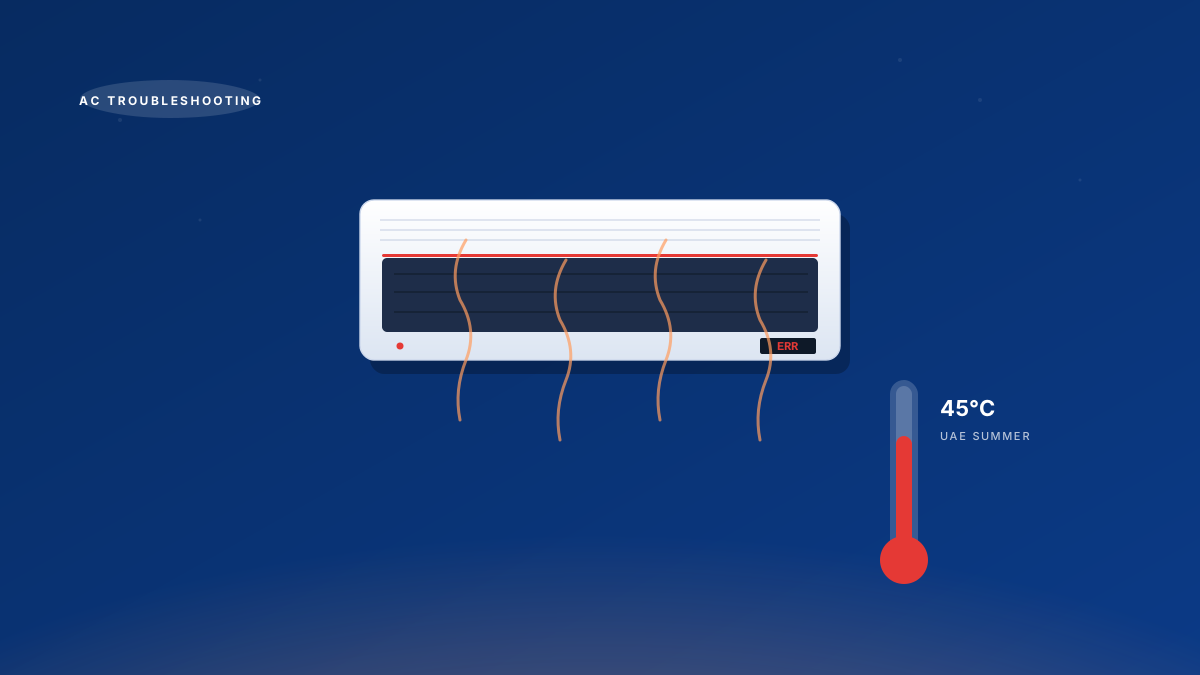
It’s the kind of morning every UAE resident dreads. You wake up at 5am, the room is already warm, the AC is running but it’s blowing what feels like room-temperature air. By 9am the indoor reading is climbing past 30°C and you know – something’s wrong.
If you’ve lived through a UAE summer, you know how fast a working AC matters. Outdoor temperatures here regularly push past 45°C in July and August, and even at night they rarely drop below 32°C. Your AC isn’t a luxury – it’s the difference between a safe home and a sauna.
After more than a decade running Smart AC Repair UAE across Sharjah and Dubai, our team has been on thousands of “AC not cooling” callouts. The good news? In about six out of ten cases, it’s something simple that a homeowner can identify, and sometimes fix, themselves. The other four out of ten need a licensed technician – but knowing the difference saves you time, money and a sweaty afternoon.
Here’s the practical guide we’d give a friend.
Quick checks before you call
Five-minute sanity check: we’ve seen callouts where a child had quietly switched the AC to “fan” or “heat” mode. Always rule out the obvious first.
Walk through these five things first:
- Is the thermostat actually set to cool, and below current room temperature?
- Are doors and windows shut? UAE balcony doors are notorious for not sealing properly.
- Has DEWA dropped power recently? Some inverter ACs need a 5-minute reset before they’ll restart cooling.
- Are air vents blocked by furniture or curtains?
- Does the filter look like a dust pillow?
If those check out, move on to the real causes.
1. Dirty filters – the single most common cause
Dust is the UAE’s quiet enemy. Between regular sandstorms, construction next door and dry air pulling in particles, AC filters here clog faster than almost anywhere else in the world.
A clogged filter restricts airflow over the evaporator coil. The coil gets too cold, ice forms, and ironically the unit then blows warm air because no air can pass through. Some units shut themselves down to protect the compressor. Others keep running but cool nothing.
What to do:
- Pop off the front cover (no tools needed on most split units)
- Slide out the filters
- Rinse them under a tap until the water runs clear
- Let them dry completely (10–15 minutes in shade)
- Put them back
Pro tip: in Dubai apartments, rinse filters every 4 weeks in summer and every 8 weeks in winter. In Sharjah the dust load is slightly higher – make it every 3 weeks in summer.
If the AC still doesn’t cool after a clean filter, the problem is somewhere downstream.
2. Low refrigerant (gas)
Refrigerant – usually R410A or R32 in modern UAE units, R22 in older ones – is the working fluid that actually moves heat from your room to the outside. It runs in a sealed loop and shouldn’t need topping up unless there’s a leak.
Signs of low refrigerant:
- Cooling is weaker than usual but the unit runs continuously
- Frost or ice on the copper pipes outside or in the indoor unit
- A hissing sound near the indoor unit (gas escaping)
- Higher electricity consumption (the unit works overtime)
This is not a DIY job. Refrigerant handling in the UAE requires a licensed technician – partly because the gases are regulated, partly because you need vacuum pumps and pressure gauges to do it safely. A bad refill destroys the compressor within months.
If you suspect low gas, book a same-day diagnostic visit. The fix is usually a leak repair plus a recharge – straightforward for a trained engineer.
3. Thermostat issues
The thermostat is the brain. If it misreads the room temperature or fails to send the “cool” signal, everything downstream just sits idle.
Common thermostat problems we see:
- Sensor drift on older units (it thinks the room is colder than it is)
- Dead remote-control batteries on split ACs (people forget this for years)
- Failed display panel (the unit runs but ignores commands)
- Loose wiring inside the indoor unit
The quick test: set the thermostat 5 degrees below current room temperature. Does the compressor outside kick in within a minute or two? If not, the thermostat or its wiring is suspect.
4. Blocked or dirty outdoor unit
Walk outside to your balcony, terrace or rooftop and look at the condenser – that grey or beige metal box with the fan. After a year in the UAE it’ll typically be coated in fine sand. After a sandstorm it can be packed solid.
The condenser’s job is to dump heat from inside your home into the outside air. If air can’t move through the fins, heat has nowhere to go and your indoor unit stops cooling effectively.
What you can do safely:
- Switch the AC off completely at the breaker
- Brush loose dust off the fins with a soft brush
- Rinse with a low-pressure hose – never a pressure washer (it bends the fins)
- Let it dry for 30 minutes before switching back on
Stay off the railings. If the unit is on a high balcony or rooftop, leave it for a professional. We see too many DIY accidents from people leaning over Dubai Marina balconies to clean condensers.
5. Aging or failing compressor
Compressors are the most expensive part of any AC. In well-maintained UAE units they last 8–12 years. Without regular service they can fail in 5–6.
Signs of a compressor on its last legs:
- A loud hum or knocking when the AC starts
- The outdoor unit fan spins but the unit doesn’t cool
- The breaker trips when the AC tries to start
- A burnt smell from the outdoor unit
Compressor replacement isn’t always the right call. If your unit is over 10 years old, replacing it with a new inverter model often makes more financial sense than swapping the compressor. We’ll always give you both options with honest pricing.
When to call a technician
Some red flags need professional attention the same day:
- Burning smell from the indoor or outdoor unit
- Tripped breaker that won’t reset
- Water leaking inside the room (more than a small puddle from drain blockage)
- Ice forming on the indoor unit
- Loud knocking from the compressor
Electrical smell? Switch off immediately. If you smell burning electrical insulation, switch the unit off at the breaker and call us. Don’t try to keep using it – overheated wiring causes apartment fires, especially in older Dubai buildings with original wiring.
Our AC repair and maintenance team is on call 24/7 with same-day service across Sharjah and Dubai.
Prevention – the cheapest fix is the one you don’t need
A UAE AC is a high-stress machine. It runs harder, longer, and in dustier conditions than almost any AC in the world. A small investment in maintenance saves you the much larger cost of emergency repair in July.
Our recommended UAE service rhythm:
- Monthly – rinse filters yourself
- April / May – full pre-summer service: deep clean coils, gas pressure check, drain flush, thermostat calibration
- September / October – post-summer check-up: belt wear, capacitor health, electrical connections
- Annually – outdoor condenser professional clean
A professional service costs less than a single emergency callout in peak summer – and it’s the difference between a 6-year and a 12-year AC. We covered this in more detail in how often you should service your AC in the UAE.
Frequently asked questions
How long should an AC last in the UAE?
With proper maintenance, 8–12 years for split units and 10–15 years for ducted central systems. Without service, expect 5–7 years before major repairs start stacking up.
Why does my AC drip water inside the room?
Almost always a blocked drain line. The condensate from cooling has nowhere to go and overflows the indoor pan. This is one of the simplest repairs – usually 30–45 minutes.
Is it cheaper to repair or replace an AC in the UAE?
Rule of thumb: if the repair costs more than 50% of a new equivalent unit and your AC is over 8 years old, replace it. New inverter models pay back the difference in DEWA savings within 2–3 years.
Can I use my AC during a sandstorm?
Switch it off if outdoor visibility drops below 100 metres. Fine sand pulled into the condenser shortens the unit’s life dramatically. Wait an hour after the storm settles before restarting.
Do you service all brands?
Yes – LG, Samsung, Daikin, Carrier, Mitsubishi, O General, Gree, Trane, and every other brand sold in the UAE. Our technicians carry parts for the most common models on the van.
Get same-day service across Sharjah and Dubai
If your AC has stopped cooling and the quick checks above haven’t fixed it, don’t wait. In UAE summer, indoor temperatures can climb above 35°C within hours of an AC failure – uncomfortable for adults, dangerous for children and the elderly.
Average arrival times across Sharjah and Dubai: 45 minutes in Dubai and 60 minutes in Sharjah. Every repair is backed by our 90-day workmanship warranty.
Need this repair? We cover your city
Related reading
Why Does My AC Smell Bad? Causes and How to Fix It
A musty, sour or burning smell from your AC has a specific cause. Here is what each smell means in the UAE climate and…
Why Is My AC Leaking Water Indoors? Causes and Fixes
Water dripping from your indoor AC unit in the UAE is almost always a drainage problem. Here are the common causes, what to do…
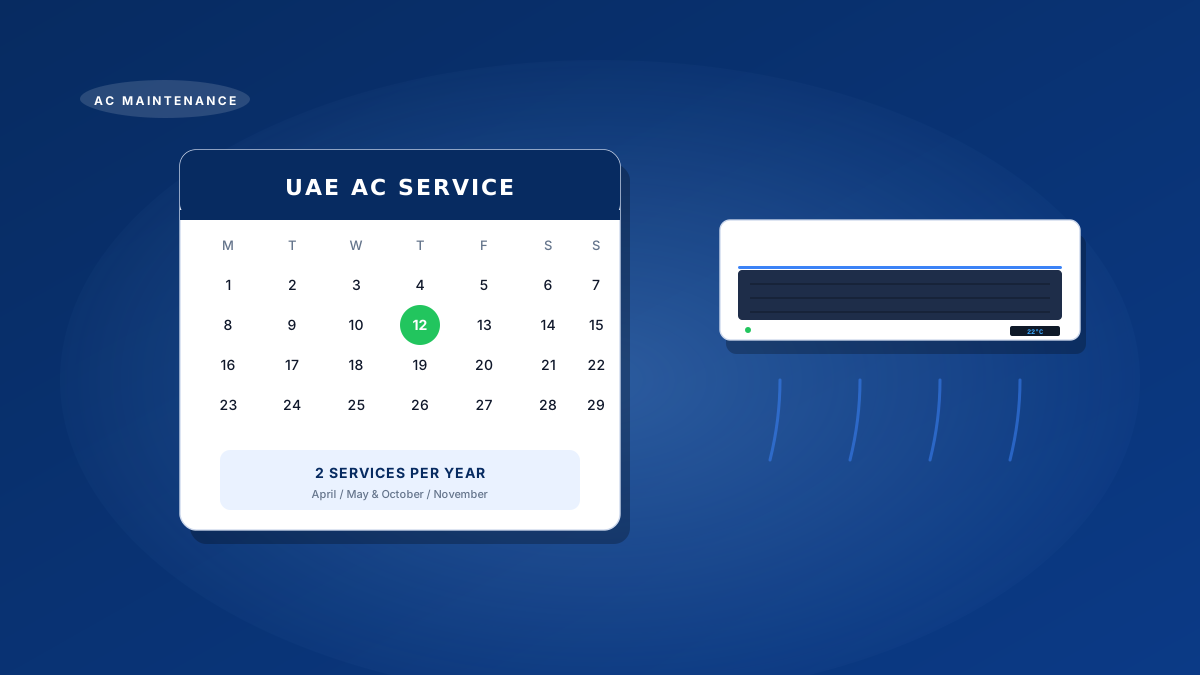
How Often Should You Service Your AC in the UAE?
The honest UAE answer: twice a year, and we'll tell you exactly when. A practical guide to AC service frequency from technicians who run…